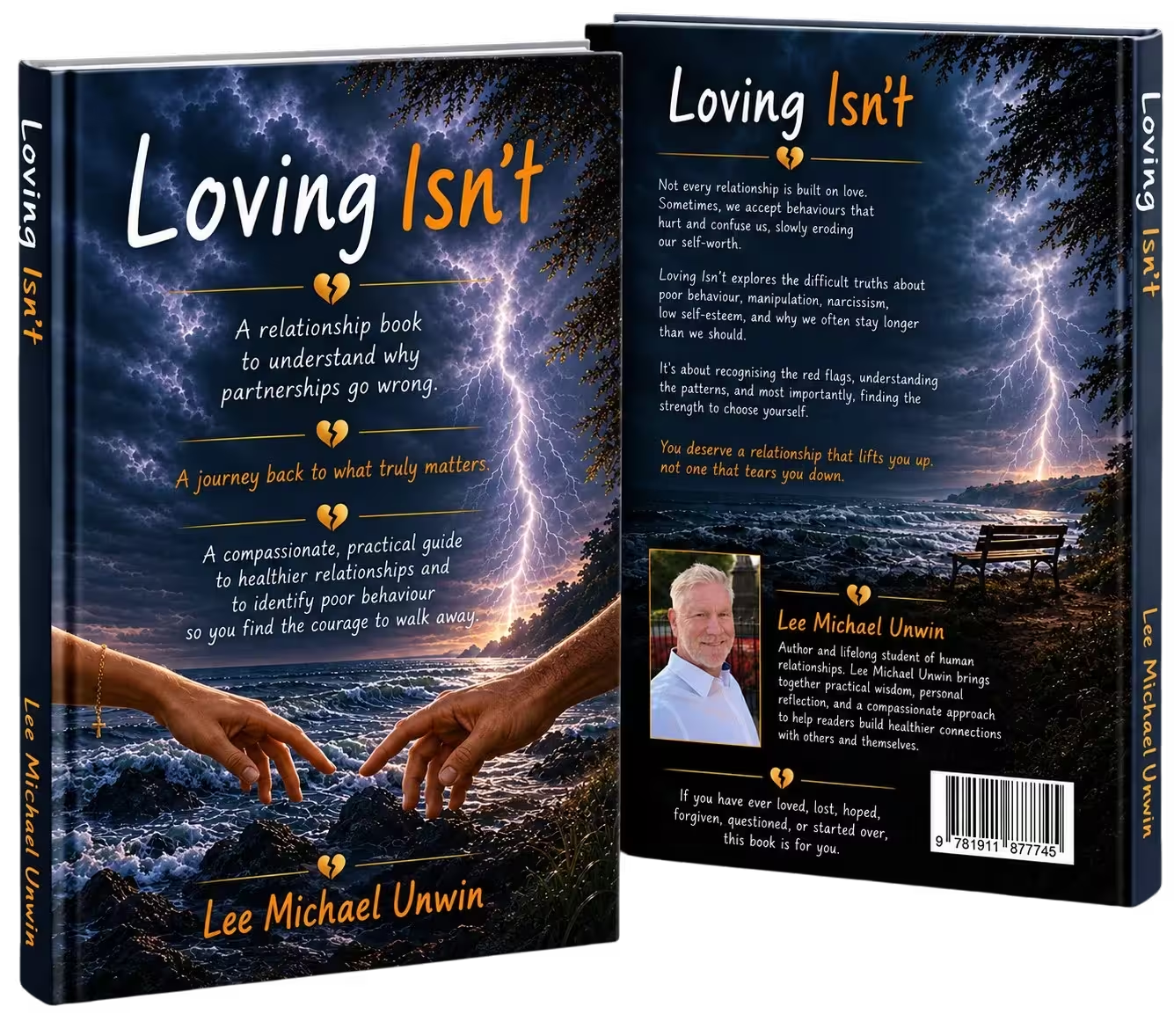
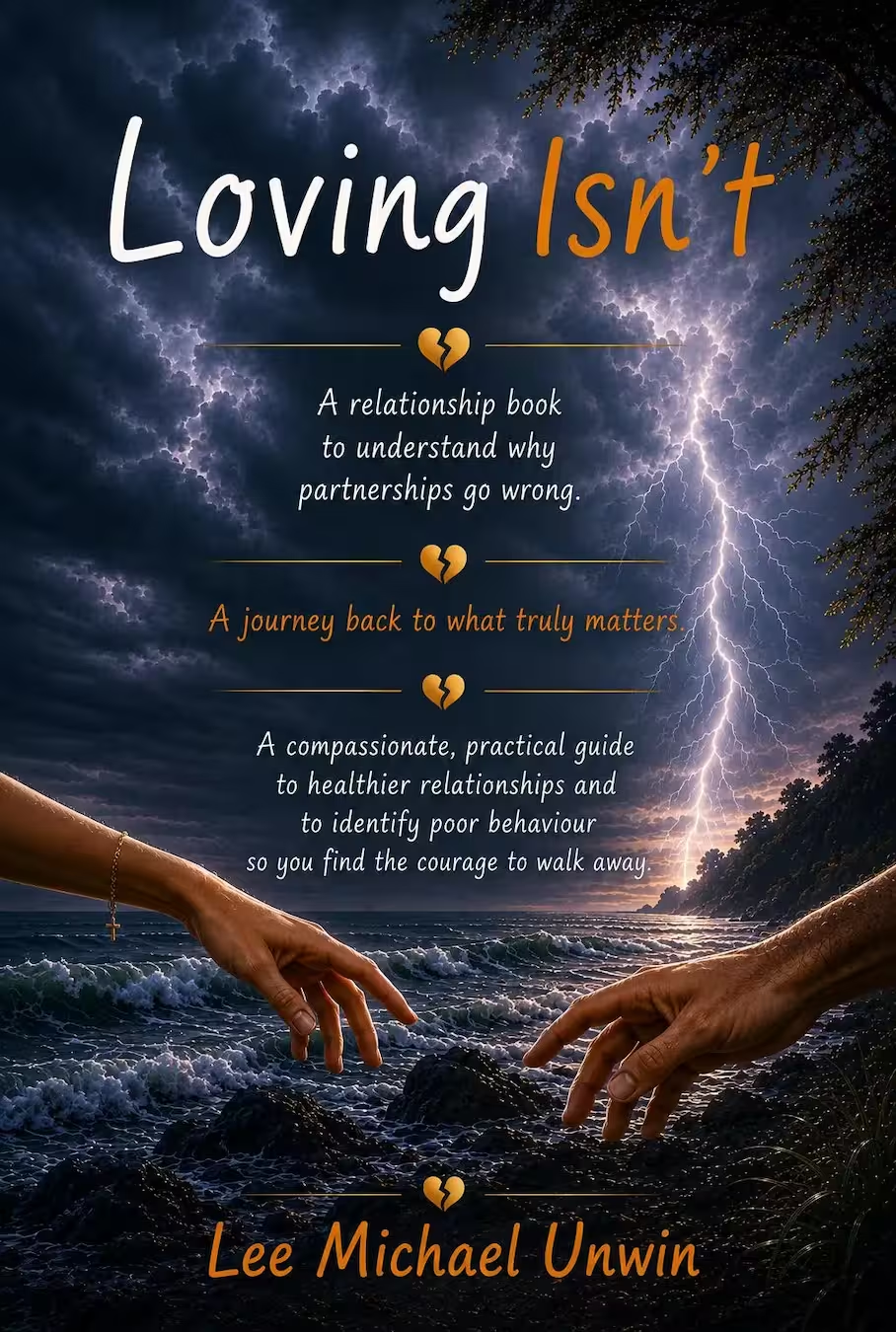
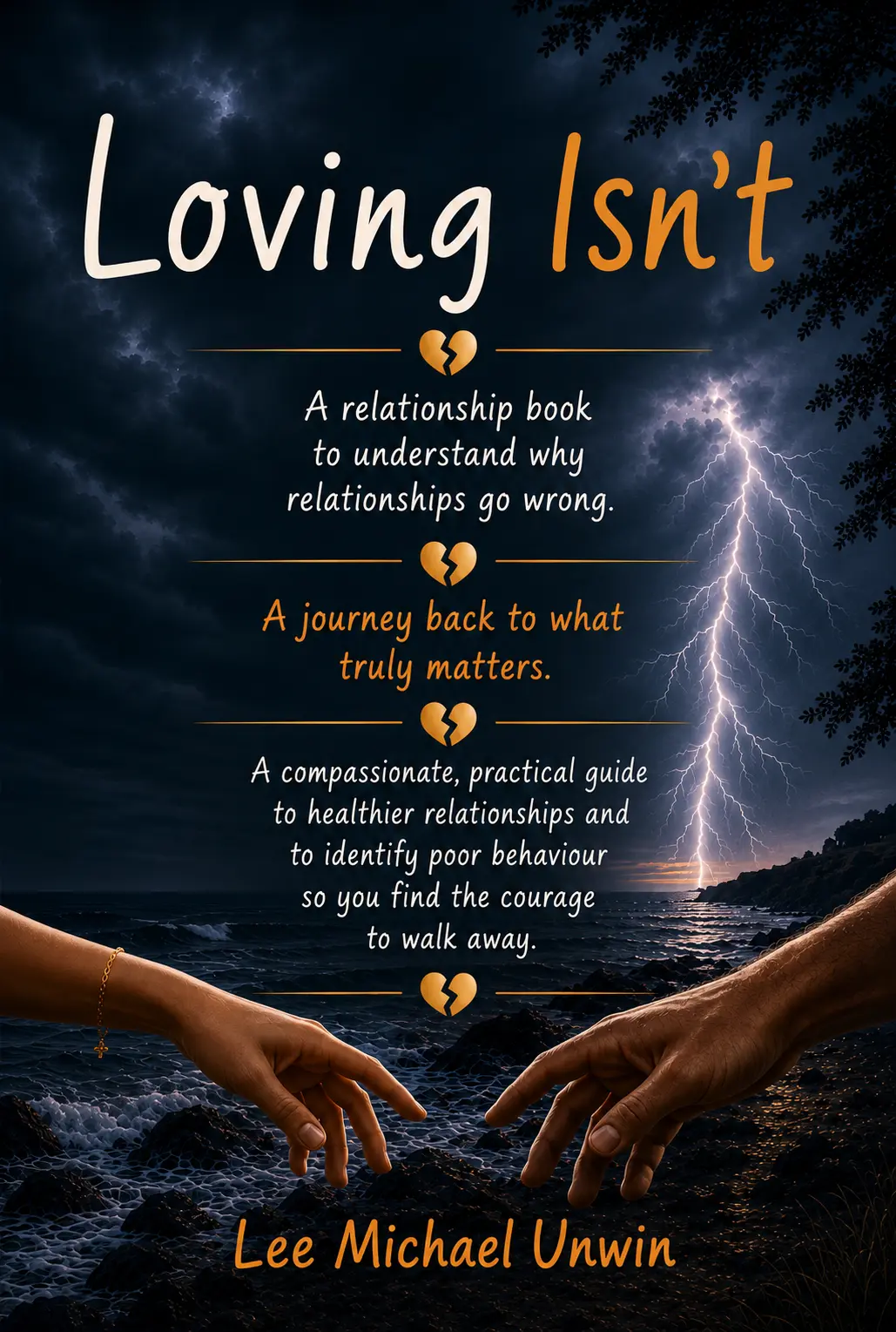
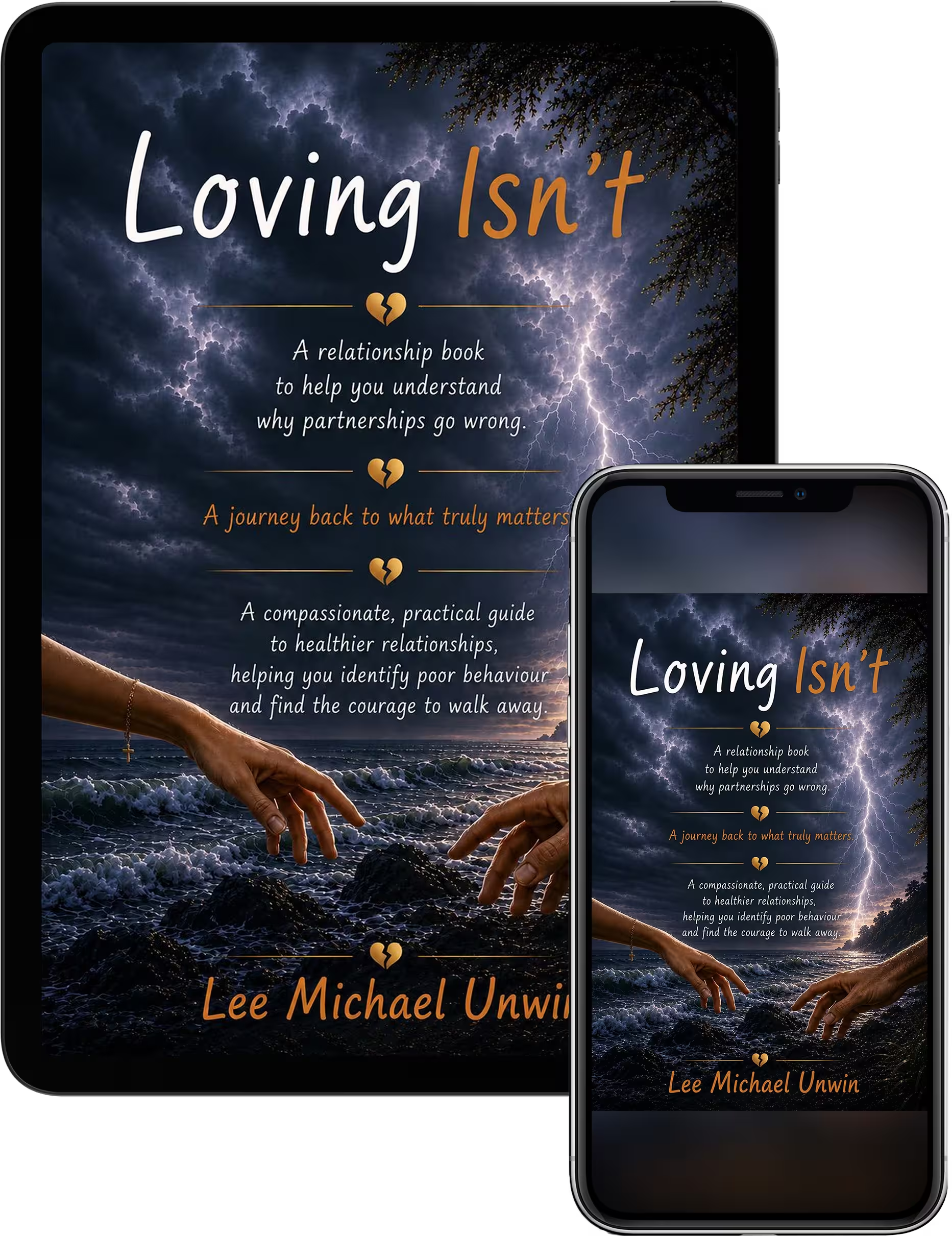
1‘Loving Isn’t’Recognising the Love That Asks You to Lose YourselfLove has the power to enrich our lives in ways few other experiences can. At its healthiest, it encourages us to grow without asking us to become smaller, quieter or less recognisable to ourselves.Yet one of the most difficult lessons we may face is accepting that love cannot be judged by feeling alone. Sometimes the greatest act of care is not holding on at any cost, but recognising when a relationship has stopped being healthy and finding the courage to protect the person we are still becoming.Loving Isn’t is about learning to recognise that difference. It considers how unhealthy behaviour can be understood without being excused, how confidence can be rebuilt without kindness being lost, and why the relationship we build with ourselves quietly influences every relationship we build with others.Lee Michael Unwin
2Copyright © 2026 Lee Michael UnwinAll rights reserved. No part of this publication may be reproduced, stored in a retrieval system or transmitted in any form or by any means, including electronic, mechanical, photocopying or recording, without the prior written permission of the copyright holder, except as permitted by law or for brief quotations used in reviews or scholarly work.This book is intended to encourage reflection, personal growth and healthier relationships. The thoughts, stories and observations shared within these pages are offered in good faith and are drawn from personal experience, years of observation and a lifelong interest in understanding people and the relationships that shape our lives.Some names, situations and identifying details have been changed to protect privacy. Any resemblance to specific individuals is coincidental unless otherwise stated or included with permission.The purpose of this book is not to judge, diagnose or criticise others. It is intended to encourage readers to value themselves, communicate honestly, recognise damaging patterns and build relationships founded upon appreciation, respect, consideration, trust and emotional safety.This book does not provide medical, psychological, legal or therapeutic advice and should not be treated as a substitute for support from an appropriately qualified professional. Readers should seek suitable guidance whenever their personal circumstances require it.
3DedicationThis book is dedicated to everyone who has ever questioned their own worth because of the way another person made them feel; to those who remained in a relationship longer than was healthy because they believed love, patience or loyalty might eventually change what was hurting them; and to those whose confidence, hope or sense of self gradually became smaller without them fully realising it was happening.It is also dedicated to those who found the courage, support and strength to begin again, whether that beginning came quietly or through painful circumstances, and to the family members, friends, teachers and companions who showed me what genuine love truly looks like. Their kindness, patience and encouragement reminded me that healthy love never requires us to become less of ourselves in order to be accepted.Every relationship leaves something with us. Some give us memories we will always treasure, while others leave lessons we may never have chosen but can still learn from, and both become part of the person we continue to become.Many of these lessons reached me later than I would have liked, but I hope that sharing them helps you recognise your own worth a little sooner. If these pages help even one person protect their self-respect, trust their instincts or reconnect with a part of themselves they feared they had lost, then every word will have been worthwhile.Lee Michael Unwin
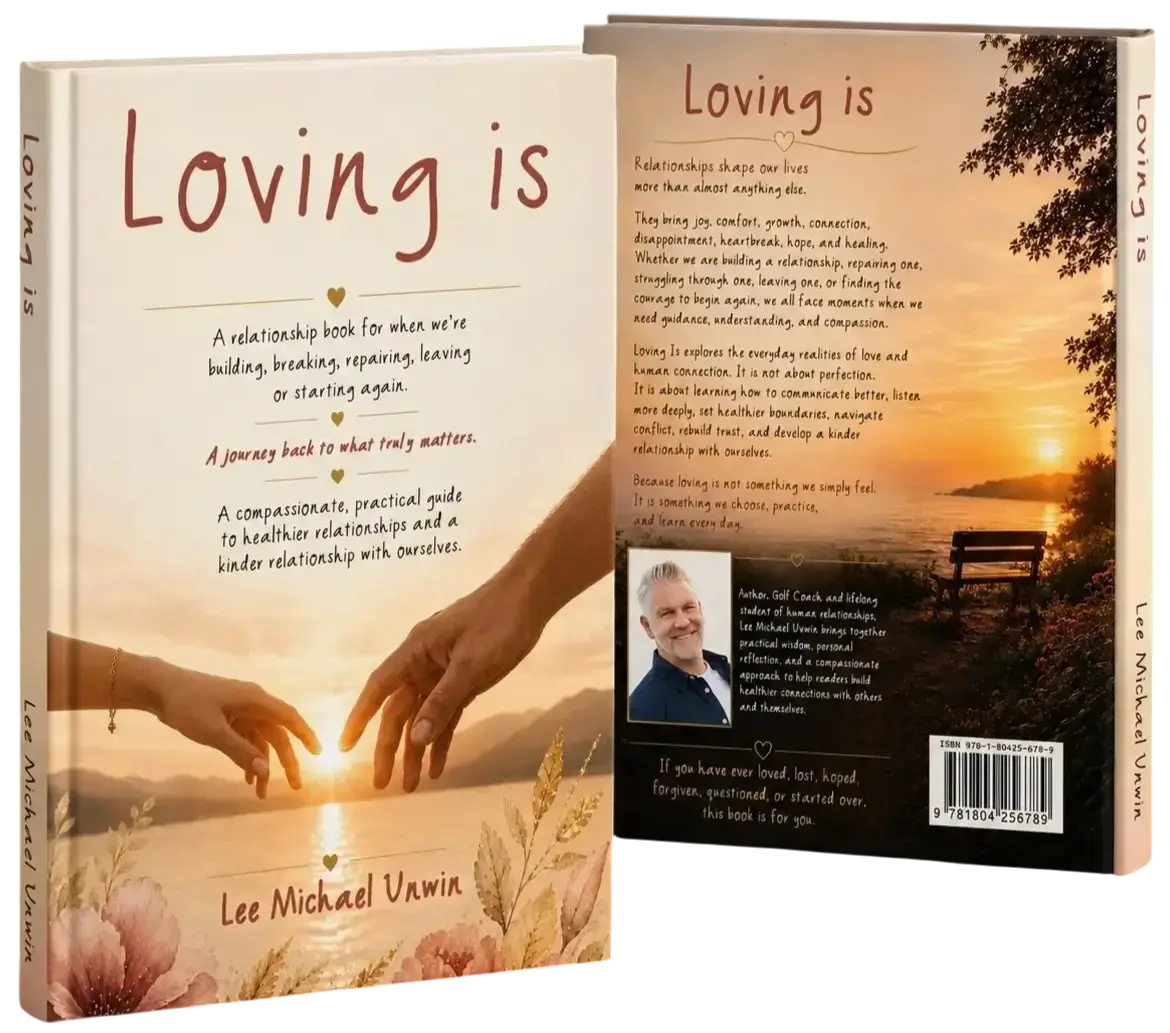
4IntroductionEvery Relationship Leaves a MarkLife often teaches us lessons we never expected to need. Some arrive through moments of happiness, while others emerge from disappointment, heartache or quiet reflection. At the time, we rarely recognise them as lessons because we are too busy trying to understand what has happened and how we feel about it. Only later, when life has given us greater distance and perspective, do we begin to see how those experiences changed our thinking, influenced our choices and quietly altered the direction of our lives.Many of the most important lessons in my own life have come through relationships, and not only romantic ones. Family members, friends, colleagues, mentors and even strangers can influence us in ways they may never fully realise. Some show us what it feels like to be valued, respected and understood, while others reveal what we should no longer be prepared to accept. Looking back, I can appreciate the importance of both because every experience has contributed something to the person I am still becoming.When I wrote Loving Is, I wanted to consider the qualities that allow healthy love to flourish. I wrote about kindness, trust, patience, forgiveness and the countless ordinary choices that help relationships grow stronger over time. The response to that book was both humbling and encouraging, but it also left me considering a question I could not ignore: what happens when love quietly loses its way?It does not always happen through one dramatic event or a single defining moment. More often, the change is gradual and difficult to recognise while we
5are living through it. One compromise begins to lead to another, boundaries become less certain, and conversations grow increasingly difficult. Before long, the person we once recognised in ourselves can begin to disappear beneath the effort of trying to keep everything together.As I reflected upon my own life, I realised that many of its greatest lessons had not come from the relationships that felt easiest. They came from those that challenged me, stretched me and, at times, left me questioning who I had become. That understanding was neither comfortable nor immediate because, like many people, I believed that loving someone meant giving more of myself whenever life became difficult. I believed patience meant enduring almost anything, and I believed loyalty meant staying even when something within me was quietly warning that I no longer felt like myself.With time, I came to understand the enormous difference between making sacrifices for someone we love and sacrificing our identity in the hope that love will eventually become what we always believed it could be. For far too long, I confused those two ideas. If you have experienced something similar, I hope these pages remind you that you are not alone and that recognising what has happened does not make your love any less genuine.This book has not been written from bitterness, anger or regret because I still believe love is one of life’s greatest gifts. Healthy love can inspire us, comfort us and encourage us to become more patient, generous, humble and compassionate. That belief has never changed, but my understanding of love has grown. I now recognise that genuine love should never require us to abandon ourselves in order to preserve it, and that understanding runs quietly through every page you are about to read.As you move through this book, I will not ask you to judge the people who have been part of your life. Most of us are trying to make sense of the experiences that shaped us while carrying our own hopes, fears, insecurities and imperfections. None of us gets everything right, which is why honest reflection offers far more than blame ever can. Lasting change rarely begins with our efforts to change somebody else; it begins when we become willing to understand ourselves with greater honesty, compassion and courage.
6You may recognise parts of your own story within these chapters. Some pages may remind you of people who loved you well, while others may stir emotions you believed had long since settled. Both responses have value because growth often begins when we become willing to look at our lives without judgement, without fear and without pretending that something did not affect us simply because it happened long ago.If, by the time you reach the final page, you see your own value more clearly, recognise unhealthy patterns sooner and feel stronger in the choices you make, then this book will have achieved everything I hoped it would. Its deepest purpose is to help you remember who you are before life, circumstance or another person quietly persuades you to forget.
7PrefaceFor most of my life, I believed love was something that simply happened.You met someone, fell in love and began building a life together. If difficulties appeared, you worked harder; if misunderstandings arose, you forgave more readily; and if life became complicated, you held on with greater determination.Much of that remains true because healthy relationships do require effort. They ask us to be patient, forgiving and willing to grow alongside another person, and no meaningful relationship can survive without those qualities. I still believe they matter deeply, but experience has shown me that effort alone cannot make every relationship healthy.My understanding was incomplete because I had not considered what can happen when patience is never met by change, forgiveness becomes separated from accountability, or loyalty is expected to have no limits. Under those conditions, qualities that would normally strengthen a relationship can begin working against the person offering them. We can become so determined to preserve what we love that we gradually stop protecting our own wellbeing.This rarely happens through one unmistakable moment. More often, it develops within everyday compromises that appear harmless when considered separately. We stop expressing an opinion because avoiding conflict feels easier, apologise simply to restore peace and begin editing our words, needs and reactions to prevent another difficult conversation. As these adjustments accumulate, somebody else’s comfort can slowly become more important than our own sense of peace, and the life we are living begins to feel less like one we have consciously chosen.
8I understand this because I have made mistakes of my own. I have ignored instincts that deserved my attention, confused potential with reality and placed greater faith in promises than in the behaviour unfolding before me. Some of life’s most valuable lessons reached me much later than I would have preferred, but their late arrival did not make them any less important.Perhaps the most uncomfortable discovery was not that I had misunderstood another person or misjudged a particular situation. It was recognising that I had gradually stopped trusting my own judgement. Rebuilding that trust required more than simply leaving difficult experiences behind because I also had to understand why I had remained silent, overlooked what troubled me and repeatedly questioned feelings that were trying to tell me something important.I do not share these experiences because I believe I have all the answers. I share them because honest reflection has helped me understand that caring for ourselves does not diminish the love we offer anybody else. It allows that love to come from choice rather than fear, confidence rather than dependency and generosity rather than the belief that we must continually prove our worth.Loving Isn’t has therefore not been written to tell you which decisions to make. It has been written to encourage questions that bring greater honesty and clarity into the relationship you have with yourself. Those questions may not always provide immediate answers, but they can help us recognise when affection, loyalty and hope are preventing us from acknowledging what our own experience has already begun to reveal.My hope is that these pages help you listen to yourself more carefully, trust what consistent behaviour is showing you and understand that protecting your wellbeing is never a failure of love. If that understanding leads to healthier choices, stronger boundaries or a renewed confidence in your own judgement, then the lessons life taught me will have found a purpose beyond my own experience, and that is why I wrote Loving Isn’t.
9 Before you turn the page and begin Chapter One, I would like to ask one small favour: please do not read this book in a hurry. Give yourself enough time to consider what each chapter brings to mind, even when the thoughts it creates are not immediately comfortable.We live in a world that continually encourages us to move faster. We scroll, skim and search for immediate answers, yet the insights that change us most rarely arrive at the same speed. They reveal themselves when we slow down, pay attention and allow ourselves to reflect honestly upon what we have experienced.This book was never intended to become a checklist or rulebook because there are no perfect relationships, no perfect people and certainly no perfect author. If there were, these pages would never have needed to be written. I would rather you think of the book as a conversation between us, perhaps shared over a cup of coffee, in which we can speak openly about the relationships that influence our lives.Some parts of that conversation may reassure you by confirming that you are not alone. Others may challenge a belief you have carried for years or encourage you to reconsider a situation that once seemed straightforward. Both responses have value because we learn very little when we listen only to the thoughts that already agree with our own.As you read, you will probably recognise people from your life. A parent, partner, family member, friend, colleague or former companion may come to mind, and
10that is entirely natural. However, try not to turn these pages into evidence against somebody else. The easiest way to read a book about relationships is to identify another person’s mistakes, while the more valuable approach is to consider what the same page may reveal about our choices, boundaries, responses and understanding.This does not mean accepting responsibility for another person’s conduct or blaming yourself for behaviour that caused you harm. It means recognising what remains within your influence and asking, with honesty rather than criticism, what you can learn from what happened. That question has helped me understand my own life more clearly than almost any answer somebody else could have given me.You do not need to agree with every thought I share because agreement is not the purpose of reflection. What matters is your willingness to remain open, curious and truthful with yourself. There may be pages that strengthen something you already believe and others that expose an uncomfortable truth you have been avoiding, but neither should be hurried past simply because one feels easier than the other.Above all, remember that your worth has never depended upon another person’s ability to recognise or respond to it. It existed before they entered your life and remains untouched by whatever choices they make. If these pages help you believe that more deeply, then every hour spent writing them will have been worthwhile.Whenever you are ready, turn the page and take your time with what follows. Let us begin…
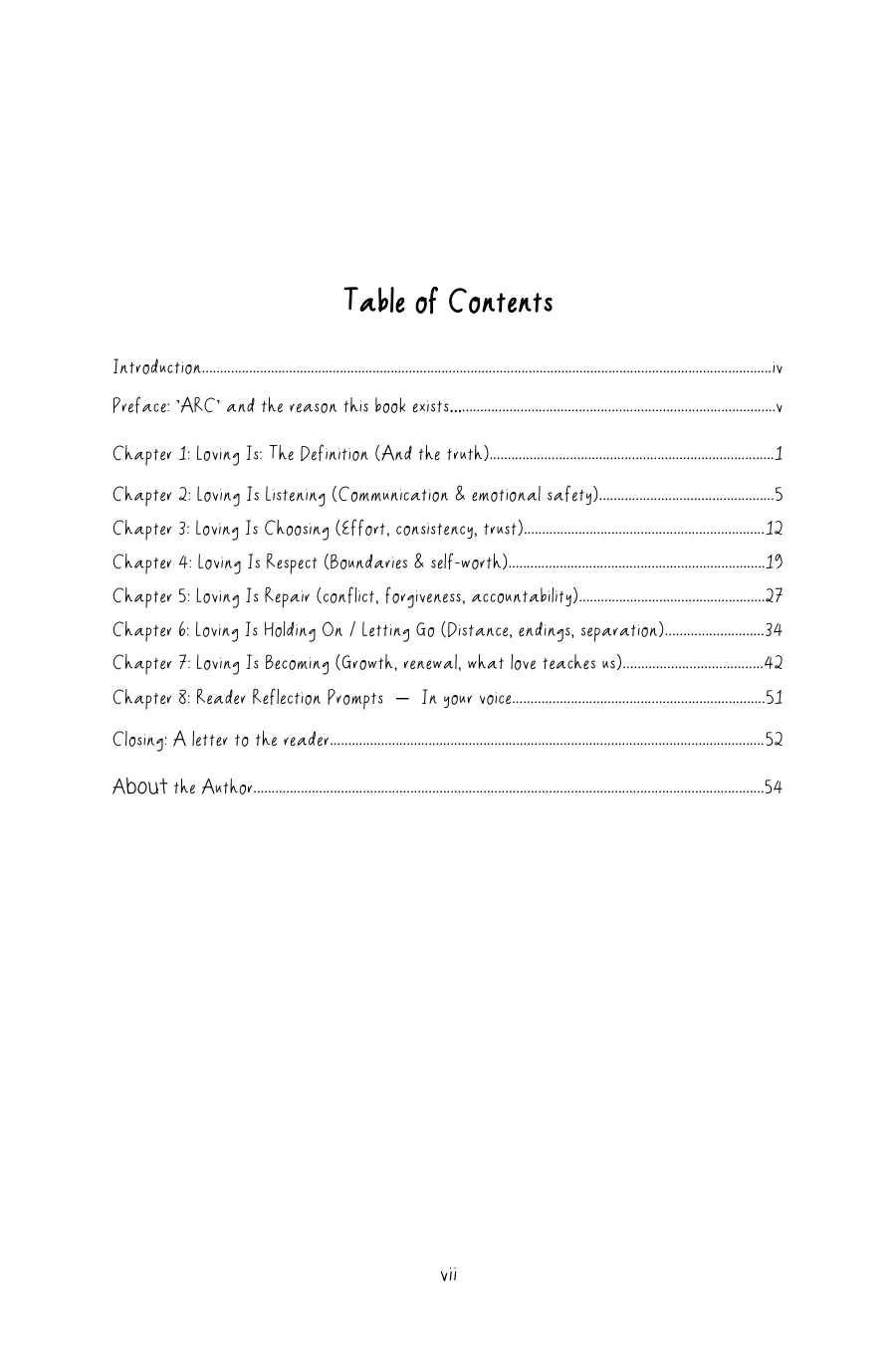
11Table of ContentsDedication�3Introduction - Every Relationship Leaves a Mark�4Preface�7Before You Begin�9Chapter One - When Loving Starts to Cost You Yourself�13Chapter Two - The Red Flags We Explain Away�19Chapter Three - Love Should Feel Safe�26Chapter Four - When Love Becomes Control�33Chapter Five - Why We Stay Too Long�39Chapter Six - The Courage to Walk Away�45Chapter Seven - Finding Yourself Again�52Chapter Eight - Heart Shaping�60Chapter Nine - Choosing Love More Wisely�67Chapter Ten - The Love You Never Lose�75Chapter Eleven - The Life You Choose�82Closing Letter - Coming Home to Yourself�89About the Author�92
13 There are moments in life that seem entirely ordinary while we are living them, yet years later we recognise them as the moments that quietly changed everything. For me, one of those moments did not arrive after a dramatic argument or at the end of a relationship. There was no defining confrontation and no single event that made me suddenly stop and take notice. It came during an ordinary evening when I was alone with my thoughts, reflecting on life in the way we all occasionally do when the noise of the world finally fades.Out of nowhere, a single question entered my mind. “When did I stop feeling like myself?”It wasn’t a question born from anger, resentment or self-pity. It came from genuine curiosity. Looking back, I realised the answer wasn’t hidden inside one life-changing event. It had been developing quietly over months, perhaps even years, without me fully recognising it. That is how it so often happens.Very few people wake up one morning and consciously decide to lose themselves. We don’t suddenly abandon our confidence, our identity or the things that once made us happy. Instead, it happens gradually, almost unnoticed. One compromise feels reasonable. One disappointment seems forgivable. One difficult conversation is postponed because tomorrow feels like a better time.Tomorrow becomes next week, next week becomes next month and before long, we find ourselves adapting to a relationship that no longer feels like the one we first chose. I understand this because I have lived it.
14Like many people, I believed commitment was one of the greatest expressions of love. I admired loyalty. I believed in perseverance. I believed relationships deserved patience, forgiveness and determination. I still believe all of those qualities matter deeply. But experience eventually taught me something I wish I had understood much earlier. There is an enormous difference between fighting fora relationship and fighting simply to survivewithinone.Healthy love encourages us to grow. Unhealthy love quietly encourages us to disappear. The difficult part is that, in the beginning, the difference is rarely obvious.Most unhealthy relationships do not begin with cruelty, manipulation or constant conflict. If they did, very few people would stay. They usually begin with hope, excitement, affection and the genuine belief that you’ve found someone with whom you can build a future. The changes come slowly. So slowly that they almost escape our attention.Perhaps you stop mentioning something because every conversation seems to end in disagreement. Perhaps you apologise, not because you believe you were wrong, but because restoring peace feels easier than continuing the discussion. Perhaps you quietly let go of hobbies, friendships or ambitions because they somehow create tension at home. Each decision feels insignificant on its own, yet together they begin changing the person you are. One day you realise you are no longer making choices because they feel right. You are making them because they avoid conflict.Sometimes self-loss is revealed not only by what we stop doing, but by the version of ourselves we begin performing. We become calmer than we truly feel, more agreeable than we honestly are and less willing to admit that we need anything at all. At first, this may seem like consideration, yet a relationship cannot know us deeply if it only ever meets the carefully managed person we believe it will accept. When needlessness becomes the price of belonging, we may remain beside somebody while feeling increasingly unknown.One of the greatest misconceptions about love is believing that sacrifice and self-loss are the same thing. They are not. Every healthy relationship asks us to compromise. There will always be times when we place someone else’s needs before our own. We forgive, we support, and we make adjustments because sharing a life with another person requires generosity. Healthy compromise, however, always
Full versionContinue Reading 'LOVING ISN’T'
Continue with the complete second book in Lee Michael Unwin’s trilogy.
- The Red Flags We Explain Away
- Love Should Feel Safe
- When Love Becomes Control
- The Courage to Walk Away
- Finding Yourself Again
📖 Buy the full book — £2.99Instant digital delivery